

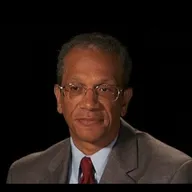
Daniel Hastings
Massachusetts Institute of Technology (MIT)
Convening Panel
Affiliations
Cecil and Ida Green Professor in Education of Aeronautics and Astronautics, Massachusetts Institute of Technology (MIT)
Biography
Daniel E. Hastings is an American physicist, currently the Cecil and Ida Green Education Professor and the former director of the Singapore-MIT Alliance for Research and Technology (SMART) at the Massachusetts Institute of Technology. Hastings was head of the Department of Aeronautics and Astronautics from January 1, 2019 -June 30, 2023. He has served as the Chief Scientist of the US Air Force and on many national level boards.
Dr. Hastings earned his B.A. at Oxford University in the UK (1976) and his S.M. (1978) and Ph.D. (1980) at the Massachusetts Institute of Technology, writing his doctoral thesis on "The high‐β universal drift mode."
Dr. Hastings was an associate professor (1980-1993) and later full professor for the Department of Aeronautics and Astronautics at MIT (1993-present). He was also the associate department head of research (1993-1996). He took a short leave to be the Chief Scientist of the US Air Force (1997-1999) and served on the National Science Board from 2002-2008. Dr. Hastings was asked to direct the Technology and Policy Program (TPP) at MIT (2000-2003) as well as associate director and co-director of the Engineering Systems Division (2000-2004), and later became its director (2004-2005). Dr. Hastings became the Dean for Undergraduate Education (2006-2013) and then the CEO and Director of the Singapore-MIT Alliance for Research and Technology (2014-2018). As of July 1, 2023, he worked for the senior administration at MIT in a number of interim roles. Dr. Hastings has received many honors, including Honorary Fellowship in the American Institute of Aeronautics and Astonautics and membership to the National Academy of Engineering (2017), fellowship in the International Astronautical Federation (1998), and the Air Force Distinguished Civilian Award (1997, 1999). In February 2026, he returned to a regular faculty role in the Department of Aeronautics and Astronautics.
Research Focus
- What is the most cost effective way to move groups of satellites in near earth space so as to efficiently observe natural disasters?
- How can we get rid of orbital debris that is cluttering up near earth space and is left over when users abandon space systems?
- How can the deep uncertainty caused by long term policy decisions be incorporated in the design of space missions?
- What does resiliency look like for a complex system composed of space, air and undersea assets designed to monitor the environment?
GFI Writings

Daniel Hastings
Massachusetts Institute of Technology (MIT)
Engineering: Love Perhaps Conceived as Knowledge
My discipline is engineering (aerospace engineering in particular). Engineering at its best is about creating products, systems, and architectures which are responsive to a society’s needs and that improve the human condition. Examples are the provision of clean water, the electrification of society…
Daniel Hastings
Massachusetts Institute of Technology (MIT)
Developing Virtues in Citizens and Institutions
This is a thoughtful preview. In my own scholarship based on science and engineering, much seems very certain such as the fact that the earth is a prolate spheroid whose gravitational potential is measured and modeled. This allows us to very accurately calculate orbits for satellites. Here the truth…
Daniel Hastings
Massachusetts Institute of Technology (MIT)
Is All Weapons Research Acceptable?
I am deeply and fundamentally in agreement with the argument. I would like to know as an engineer who does research how it guides me with respect to the choices of research, in particular, research on weapons and what classes of weapons. Is all weapons research acceptable if it helps sustain the cre…
Daniel Hastings
Massachusetts Institute of Technology (MIT)
Life Going Well Requires Life Led Well
My scholarship is on changes in the space enterprise and how to make it more broadly accessible and cost effective. It would primarily affect “life going well” in that when the space enterprise changes many more people overall at the world will be able to innovate in the new space enterprise. Like m…
Daniel Hastings
Massachusetts Institute of Technology (MIT)
Space Debris Is a Justice Problem
Satellites tend to be expensive. How can the results of space based observation be made useful to all nations especially those who cannot afford them. Will the proliferate dumping of debris in space hamper others from using space?
Daniel Hastings
Massachusetts Institute of Technology (MIT)
Justice and Space-Based Communication Architectures
My research is on the design and development of large scale satellite architectures. Two examples relevant to this discussion are the Global Positioning System (GPS) and the current development of global space based systems to provide world wide internet access. There are several currently in develo…