

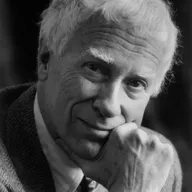
Nicholas Wolterstorff
Yale University
Convening Panel
Affiliations
Noah Porter Professor Emeritus of Philosophical Theology at Yale University
Senior Research Fellow in the Institute for Advanced Studies in Culture, University of Virginia
Honorary Professor of Australian Catholic University
Biography
Wolterstorff was born on January 21, 1932, to Dutch emigrants in a small farming community in southwest Minnesota. After earning his BA in philosophy at Calvin College, Grand Rapids, Michigan, in 1953, he entered Harvard University, where he earned his MA and PhD in philosophy, completing his studies in 1956. He then spent a year at the University of Cambridge, where he met C. D. Broad. From 1957 to 1959, he was an instructor in philosophy at Yale University. Then he took the post of Professor of Philosophy at Calvin College and taught for 30 years. He is now teaching at Yale as Noah Porter Professor Emeritus Philosophical Theology.
In 1987 Wolterstorff published Lament for a Son after the untimely death of his 25-year-old son Eric in a mountain climbing accident. In a series of short essays, Wolterstorff recounts how he drew on his Christian faith to cope with his grief. Wolterstorff explained that he published the book "in the hope that it will be of help to some of those who find themselves with us in the company of mourners."
He has been a visiting professor at Harvard University, Princeton University, Yale University, the University of Oxford, the University of Notre Dame, the University of Texas, the University of Michigan, Temple University, the Free University of Amsterdam (Vrije Universiteit), and the University of Virginia. In 2007, he received an honorary Doctorate in Philosophy from Vrije Universiteit Amsterdam. He has been retired since June 2002.
Wolterstorff published his memoir with William B. Eerdmans Publishing Co. in 2019, illustrating the close relationship between his personal life and his distinguished academic career.
Research Focus
I retired from my professorship at Yale at the end of 2001. In my case, retirement has not meant inactivity. Since retirement, I have published four books on justice, two on political philosophy and theology, two on liturgy, one on art, one titled Religion in the University, and a memoir titled In This World of Wonders. During this past year I have written a rather long article on justice for the newly-inaugurated St Andrews Encyclopedia of Theology, and the plenary address for an upcoming (January) symposium titled “Screen Stories and Moral Understanding,” organized by Prof. Carl Plantinga (Calvin U.) and sponsored by the Templeton Foundation. I continue to be strongly interested in justice, art, and liturgy. The editors of the newly established Analyzing Theology series (Jonathan Cockayne and Joshua Rutledge) have put together, for the first volume in their series, a collection of my articles, some published, some unpublished, titled United by Love: Justice, Art, and Liturgy.
GFI Writings

Nicholas Wolterstorff
Yale University
Neighbor-Love in Career Advice for Students
In my years as a professor of philosophy, I often had students come to my office with questions about the course they were taking from me. They didn’t understand something I said in my last lecture, they expressed disappointment over the grade I had given them on their essay and asked for advice abo…
Nicholas Wolterstorff
Yale University
Virtues in the Classroom
My career has been that of a professor of philosophy. Jennifer Herdt’s fine essay, “The Virtues,” has led me to reflect on the virtues essential to the flourishing of the philosophy classroom, virtues that I have tried over the years to cultivate in my students and virtues that I have myself tried t…
Nicholas Wolterstorff
Yale University
Embodied Goodness in Human Beings, Art, and Liturgy
A prominent theme in Professor Biggar’s essay “Order” is that of embodied goodness – that is, of the goodness possessed by God and by things of divine and human creation. There are some writers who hold that there is no embodied goodness, no objective worth or praiseworthiness in things. Things have…
Nicholas Wolterstorff
Yale University
The Christian Scholar Must Attend to the Virtues
What a fine brief statement on virtues Jennifer Herdt has given us! From some of the responses to my own Theology Brief on justice, it became clear to me that a significant gap in what I have written about justice is that I have paid no attention to the virtue of being just ; I have focused all my a…
Nicholas Wolterstorff
Yale University
Worship, Art, Justice, and Love Are All Modes of Acknowledging Goodness
Nigel Biggar’s theology-brief preview, “Created Order,” is an excellent brief statement of the Christian understanding of the created order, along with some helpful suggestions concerning the implications of that understanding for the work of scholars. I affirm everything he says. In particular, I a…
Nicholas Wolterstorff
Yale University
Flourishing Has an Emotional Dimension
I think the Flourishing preview is superb. I am surprised that, when I wrote Justice: Rights and Wrongs , I did not see that, in addition to the agential and circumstantial dimensions of flourishing, which I took note of, there is the emotional dimension. It now seems to me blindingly obvious. Incid…
Nicholas Wolterstorff
Yale University
Justice
I found the twenty-six Disciplinary Briefs in response to my Theology Brief, “Justice and Rights,” perceptive, inspiring, and gratifying – and sometimes surprising. What I found perceptive and inspiring was the amazing variety of ways in which these scholars employ considerations of justice in their…
Nicholas Wolterstorff
Yale University
Justice and Rights
How may Christian academics engage justice and rights in their scholarship and the academy? God’s love of justice recurs repeatedly in the Old Testament and it is integral to the teaching of Jesus and the Apostles. Consistent with this teaching, I distinguish between first order justice , where agen…
Nicholas Wolterstorff
Yale University
Justice
Essential to any discussion of justice is the distinction between two fundamentally different forms of justice – call them first-order justice and second-order justice . First-order justice consists of justice in our ordinary interactions with each other: teachers and students treating each other ju…